Welcome back to the newsletter.
This week, we’re looking at the evolution of Omega’s toughest diver, taking a trip back to 1904 to realize why pilots started wearing watches in the first place, and highlighting a piece that democratized one of horology’s most expensive complications.
Let’s dive in.
1. Recent news
The Evolution of the Omega Planet Ocean: From Tool Watch to Tech Flex
Omega recently expanded its Planet Ocean “Deep Black” collection. While specific new colorways or limited editions (like the recent America’s Cup tie-ins) grab headlines, they are indicators of a much larger shift in what the Planet Ocean represents.
When the Planet Ocean launched around 2005 with the Caliber 2500, it was Omega’s answer to the Rolex Submariner, but with twice the water resistance (600m) and a helium escape valve that looked like a second crown at 10 o’clock. Those early models—especially the 42mm versions with aluminum orange bezels—were relatively svelte, utilitarian, and felt like genuine successors to the Seamaster 300s of the 1960s.
Today’s “Deep Black” ceramic models are an entirely different species.
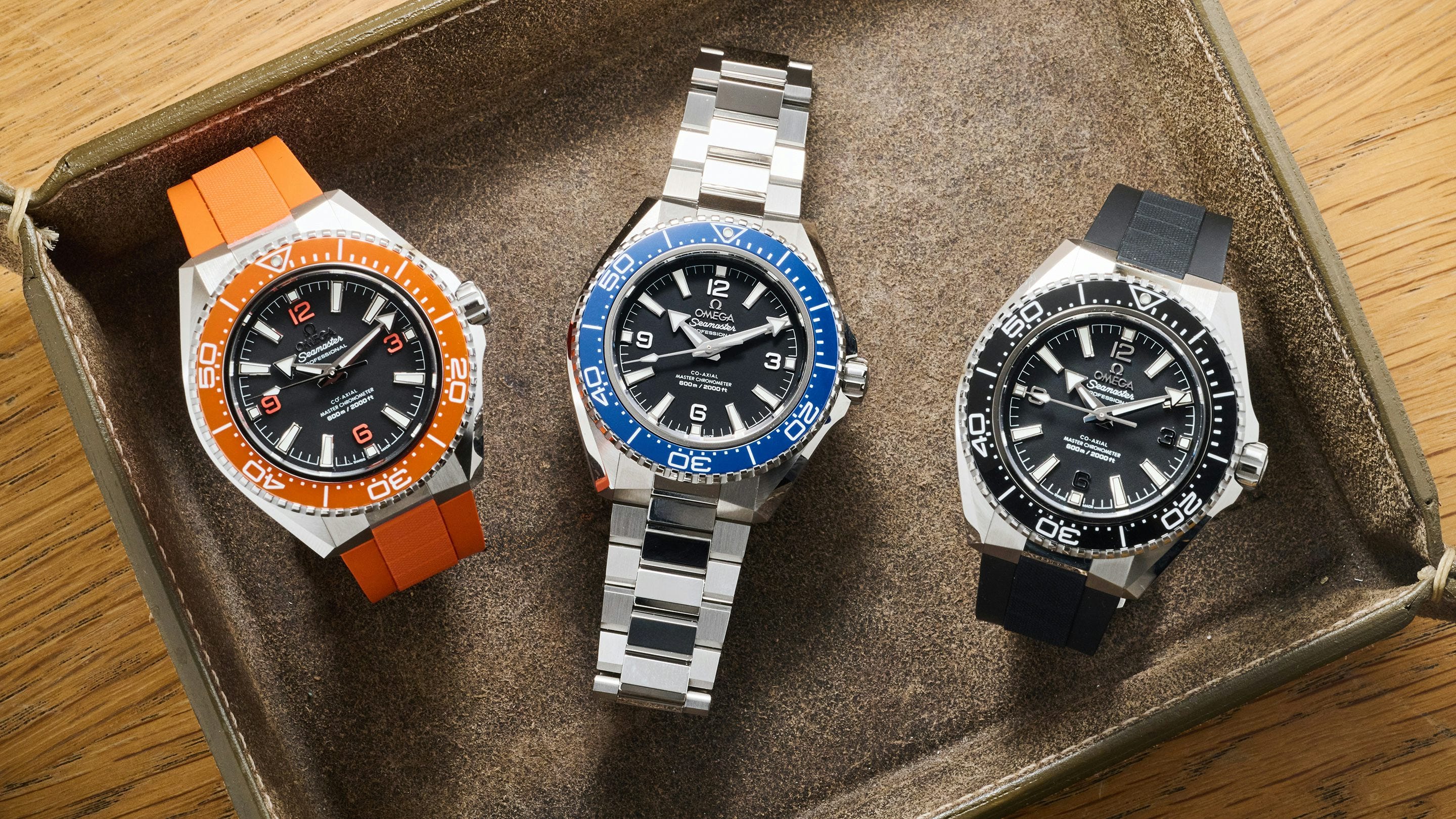
The Comparison: Then vs. Now - The modern ceramic Planet Ocean isn’t just a dive watch; it is a flex of Omega’s industrial materials muscle. They are carving entire cases out of single blocks of ceramic. The dials are ceramic. The bezels are ceramic with Liquidmetal™ or vulcanized rubber injections. They are virtually scratch-proof and impervious to UV fading.
Internally, the shift from the modified ETA-based Caliber 2500 to the fully in-house Master Chronometer 8900 series means you are getting industry-leading magnetic resistance and Co-Axial efficiency.
The Trade-off - But, as we know, technological advancement in watchmaking often comes with physical heft. The early 2500 Planet Oceans sat on the wrist with a manageable profile (around 14.5mm thick). The modern ceramic beasts push past 16mm, often approaching 17mm depending on the complication.
They are arguably better watches technically—more durable, more accurate, more advanced. But they have moved away from the “everyday tool watch” vibe of their ancestors into the realm of “luxury sport engineering statements.” They demand a large wrist and a certain bravado to pull off.
The Verdict - If you want a versatile daily driver, the older 2500 models on the secondary market remain incredible value. But if you want to wear the cutting edge of materials science on your wrist—and you have the forearm real estate to handle it—the modern ceramic Planet Ocean stands almost entirely alone in its price bracket.

2. History
The Dinner Party Complaint That Invented the Pilot’s Watch
We take wristwatches for granted today, but at the turn of the 20th century, a gentleman wore a pocket watch. Wristlets were mostly considered decorative items for women—until a frustrating night in Paris changed everything.
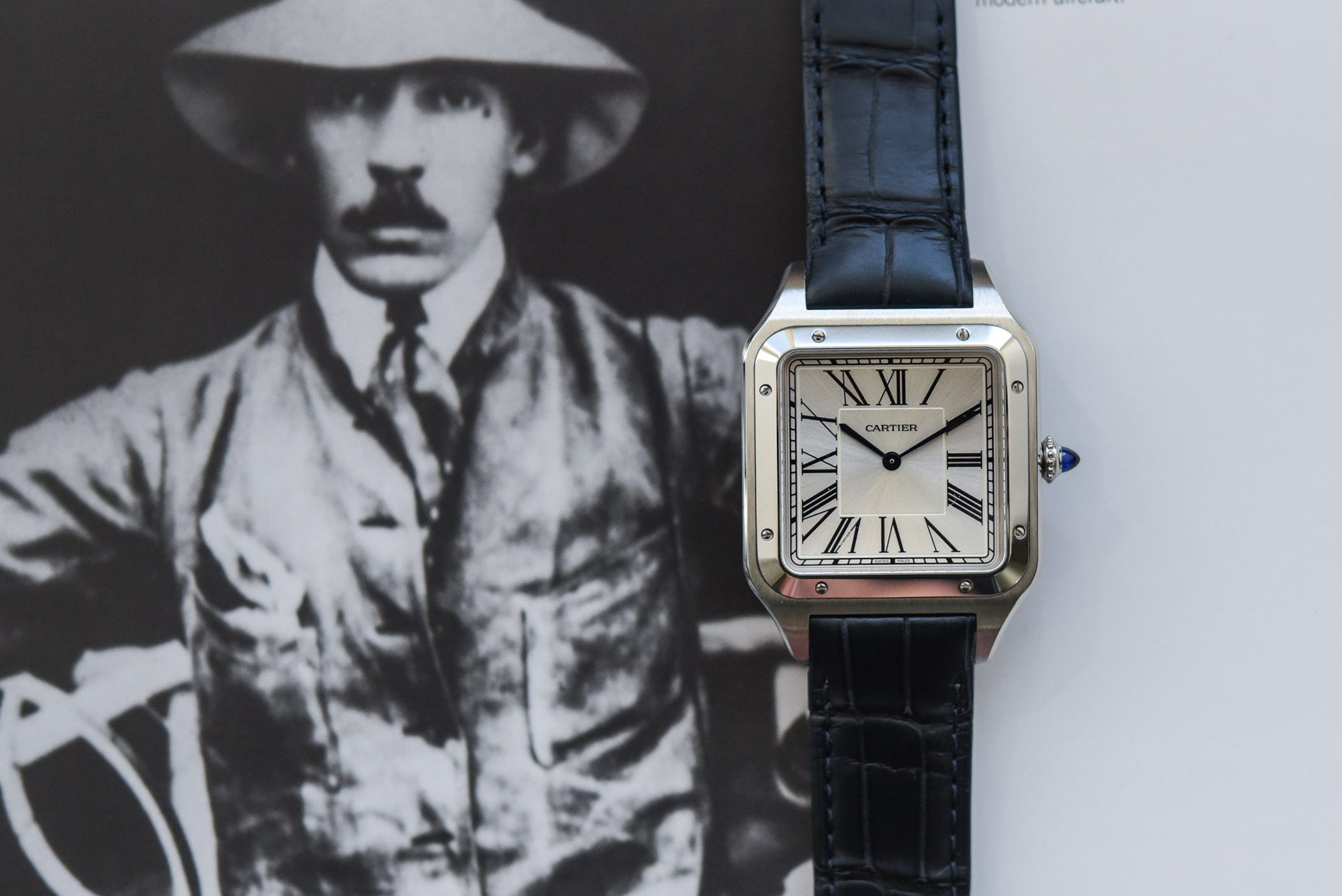
The year was 1904. The setting was Maxim’s, the legendary Parisian restaurant. Louis Cartier was dining with his good friend, the charismatic Brazilian aviation pioneer, Alberto Santos-Dumont.

Santos-Dumont was a celebrity of his day, famous for flying dirigibles around the Eiffel Tower. At dinner, he vented a serious frustration to Cartier. Flying these early, unstable machines required both hands on the controls at all times. Yet, to monitor his flight times and fuel consumption, he had to fumble in his waistcoat pocket, pull out a watch, open the hunter case, check the time, and tuck it back in.
It was dangerous and impractical. He needed the time to be visible without letting go of the aircraft.
Louis Cartier took the problem to heart. He didn’t just solder lugs onto a round pocket watch (which was the common makeshift solution during WWI years later). He designed something entirely new.
Cartier created a square watch (unusual for the time) with a flat profile designed to sit comfortably on the wrist, secured by a leather strap. He utilized exposed screws on the bezel, mirroring the rivets used in aircraft construction, lending it an industrial, modern aesthetic.
He presented it to Santos-Dumont, who wore it on his very next flight in 1906. Because Santos-Dumont was a major public figure, the press and public noticed the peculiar device strapped to his wrist.
The “Santos de Cartier” wasn’t just the first purpose-built pilot’s watch; it was arguably the first true tool watch designed for a specific professional application, and the catalyst for men accepting the wristwatch as a masculine, functional accessory.
3. Watch Of The Week
The Frederique Constant Classic Worldtimer
In the hierarchy of watch complications, the Worldtimer usually sits near the top, often gated behind five-figure price tags from the “Holy Trinity” brands. It’s a romantic complication, displaying the time across the globe’s 24 major time zones simultaneously using a rotating city disc and a 24-hour ring.
This week’s pick is the watch that broke that barrier: The Frederique Constant Classic Worldtimer Manufacture.
If you are looking for serious horological bang-for-your-buck, this watch is almost impossible to beat.
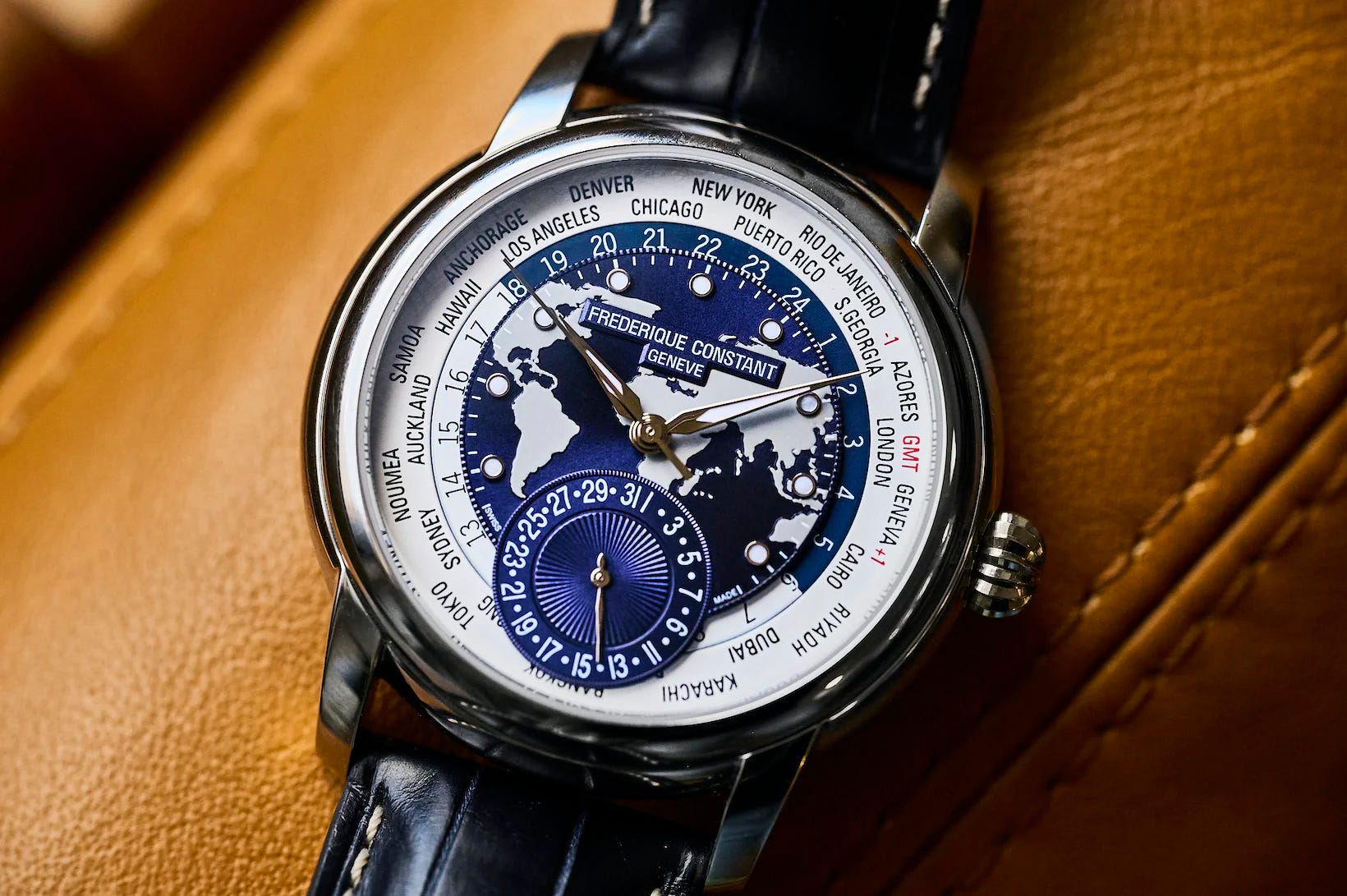
Why It Matters - When this watch was released, FC did something audacious: they developed an in-house worldtime caliber (the FC-718) and offered it for under $4,000. Even today, with price increases, it remains unparalleled value in the segment.
Many “affordable” worldtimers are actually just GMTs with a fixed city bezel that you have to mentally calculate. The FC is the real deal—the city disc and the 24-hour disc rotate.
The Details - The brilliance of the FC-718 movement is its user interface. There are no clumsy pushers on the side of the case to advance the cities. Everything—winding, date setting, and setting the worldtime function—is controlled solely via the crown. It is an incredibly elegant engineering solution that keeps the 42mm case clean and dressy.
The dial is busy, as all worldtimers are, but FC manages a classic aesthetic with a fine guilloché pattern in the center and sharp printing on the city ring.
It manages to look surprisingly similar to worldtimers costing ten times as much. It’s a watch that punches way above its weight class, proving that a manufacture movement and a high complication don’t require a second mortgage.